Navigating the Nuclear Medicine Frontier: Logistical Hurdles and Regulatory Landscapes
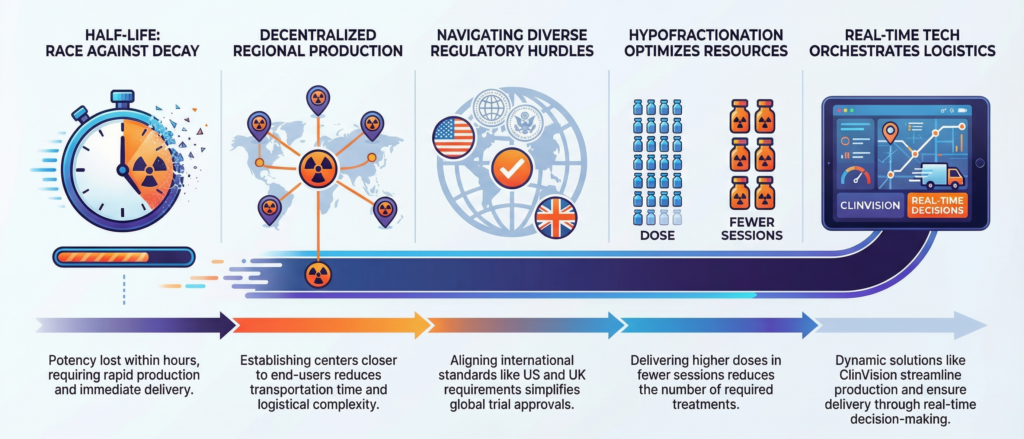
The operational reality of nuclear medicine is dictated by the physics of instability. Unlike conventional pharmacotherapy, where inventory management relies on stable chemical shelf-lives, radiopharmaceuticals are defined by time-sensitive isotopes that undergo continuous physical transformation. As a result, the clinical supply chain is not merely a delivery system but a kinetic race against isotopic decay. For industry stakeholders, success requires a sophisticated synthesis of rapid logistics, stringent regulatory navigation, and clinical innovation.
Can you set up your RTSM in 24 hours? The end of the clinical trial bottleneck
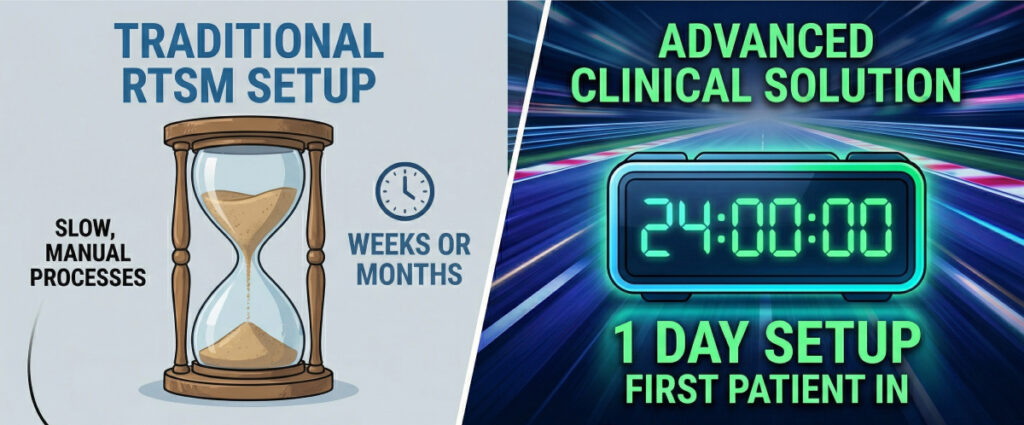
In the high-stakes sprint of clinical development, the race to First Patient In (FPI) is a matter of both mission and math. Every day lost to technical friction isn’t just a line item on a budget; it represents millions of dollars in lost patent life and, more importantly, another twenty-four hours that patients must wait for potentially life-saving treatments. For decades, the industry has accepted a fundamental bottleneck as an inevitability: the slow, linear, and document-heavy setup of Randomization and Trial Supply Management (RTSM) systems.